New Publications |
| The Questing Collector Series will make available research and little-known texts of interest to collectors, particularly those whose focus is on the literature and art of the 1890s and early 20th century. Each production is limited to 40 copies and will not be reprinted. The first three titles look at Oscar Wilde and Aubrey Beardsley, the second three titles examine Charles Shannon and Idylls of Rural Life. Aubrey Beardsley and Lysistrata, and the programmes of Lady Windermere's Fan 1892 but future titles will aim to represent minor figures of the period as well as continuing to publish material on better-known writers and artists. | |
 |
Oscar Wilde as Editor: An Index to Woman's World
edited by Michael Seeney Oscar Wilde edited Woman’s World for two years and the magazine lasted for another year after he stepped down. Oscar Wilde as Editor: An Index to Woman’s World provides for the first time a guide to each issue over all three years. It considers each issue separately, incidentally demonstrating the development of the magazine following Wilde’s departure. The book contains extensive notes on contributors and illustrators and is fully indexed. Matthew Sturgis, author of Oscar said of this book, “an entirely new, entirely necessary, thoroughly interesting, and consistently diverting contribution to our understanding of Oscar”. Paperback: 15.6 x 23.4 cm., 149 pp. 4 colour & 38 black and white illustrations. ISBN 978 1 904201 410 £20.00 / $25.00 PLEASE NOTE: Out of Print but Revised Edition now available. More information |
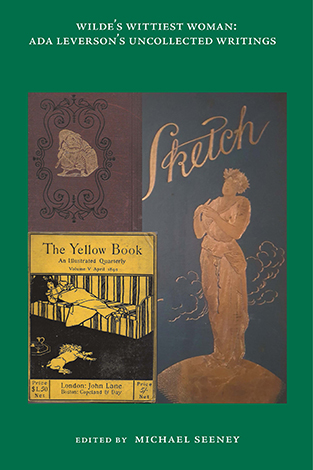 |
Wilde's Wittiest Woman: Ada Leverson's Uncollected Writings
edited by Michael Seeney Ada Leverson is best remembered today as the staunch friend of Oscar Wilde - the woman he called "Sphinx", who met him on the morning of his release from prison. But with his support she was a theatre critic and prolific contributor to a number of magazines. After Wilde's death she became a popular novelist, publishing six novels between 1907 and 1914, as well as her own recollections of Wilde in 1930. Her periodical contributions have never before been collected; this book brings together over sixty of them from Punch, The Sketch and The Yellow Book, including her parodies of Wilde, Beerbohm and other writers of the period. The parodies of Beardsley and Ricketts by E T Reed which accompanied her Punch pieces are also reproduced. Paperback: 15.6 x 23.4 cm., 238 pp. 19 black and white illustrations. ISBN 978 1 904201 33 5 £15.00 / $20.00 More information |
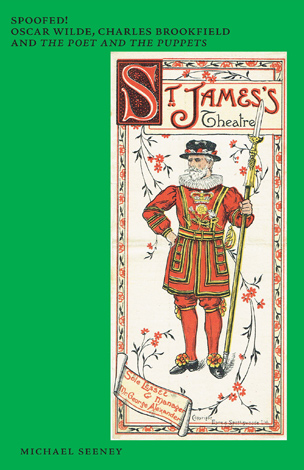 |
Spoofed: Oscar Wilde, Charles Brookfield and The Poet and the Puppets
by Michael Seeney Spoofed! Oscar Wilde, Charles Brookfield and "The Poet and the Puppets" reprints for the first time the most complete text of Brookfield's parody of Lady Windermere's Fan. The book includes details of the cast, costume, staging and music from the only production in 1892. A biographical note on Brookfield demonstrates his close involvement with the police investigating Wilde prior to the 1895 trials, and there are appendices detailing the plays and novels written by Brookfield and his stage appearances. Paperback: 15.6 x 23.4 cm., 114 pp. 19 black and white illustrations. ISBN 978 1 904201 30 4 £12.50 / $20.00 More information |
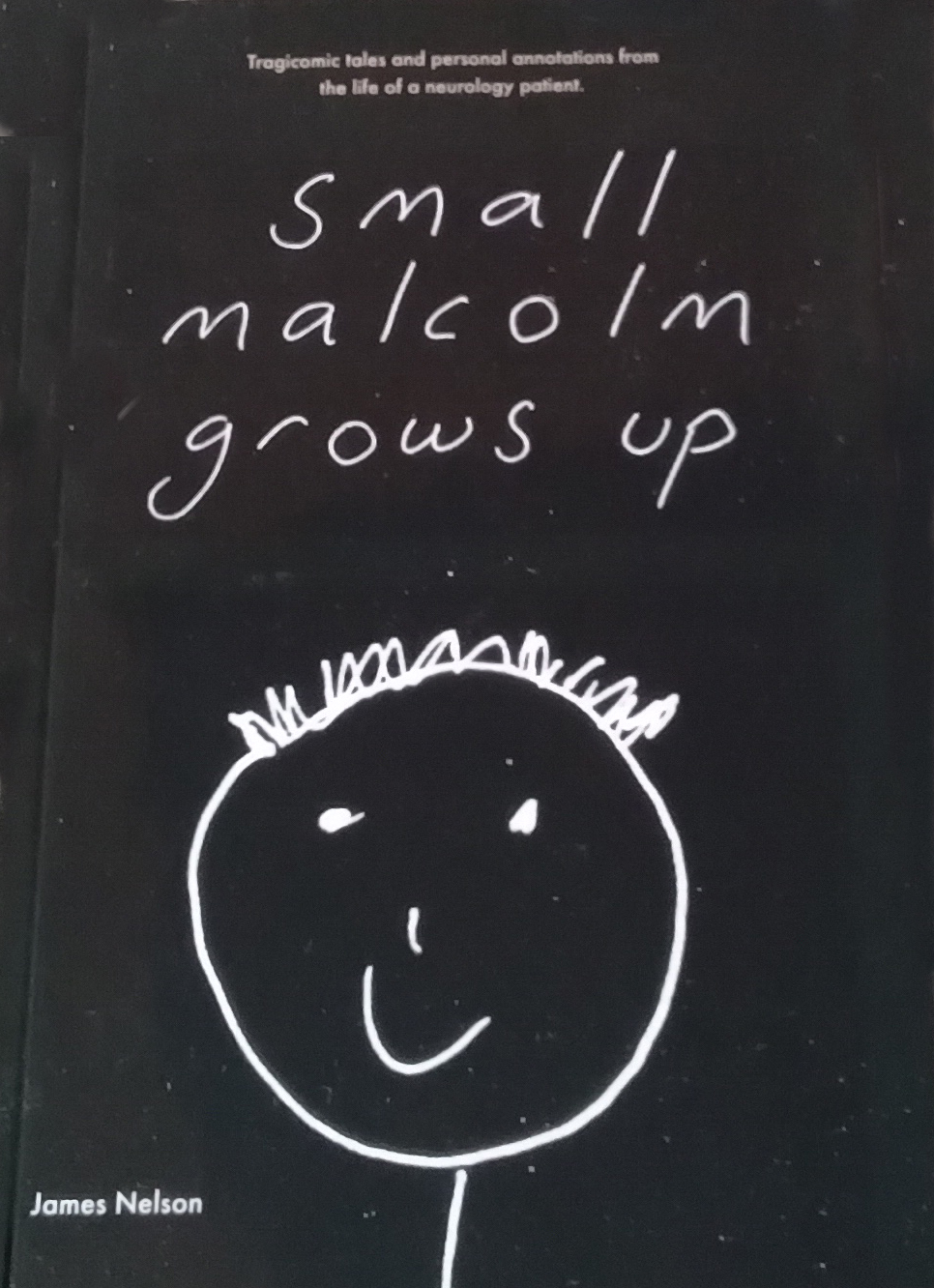 |
Small Malcolm
Grows Up by Jimmy Nelson Featuring an array of tragicomic disasters and personal struggles, James Nelson's alternative take on epilepsy is engaging, informative and engineered with humour. Regarding laughter as a key coping mechanism for what is a largely misunderstood medical condition, James aspires to raise awareness and aid fellow sufferers in this debut, which offers a respite from customary medical records. "It's incredibly refreshing to read such an honest and enlightening account of living with epilepsy. It is a vivid description of an invisible disability, told with humour and humility". Suzanne O'Sullivan (Winner of the Wellcome Book Prize 2016 , 'It's All in Your Head') Paperback: 13.8 x 19.6cm., 114 pp. 3 black and white illustrations. ISBN 978 1 90420140 3 £8.99 / $12.00 To purchase please click here |
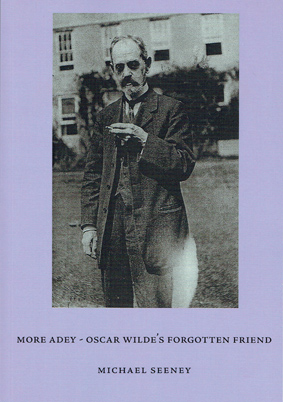 |
More Adey: Oscar Wilde's Forgotten Friend
by Michael Seeney More Adey suddenly appeared in the story of Oscar Wilde in 1895, at which point he became an essential member of Wilde’s inner circle, along with Robert Ross charged by Wilde with looking after his affairs while he was in prison. He was asked by Lady Queensberry to look after Douglas during that time and then it was Adey who met Wilde at the gates of Pentonville and accompanied him to France. A companion to Ross for about thirty years; an art critic, editor, translator and gallery administrator, Adey was a friend to many, often negotiating an uneasy peace between Ross and Douglas. But almost nothing has been known about his life before he became friends with Wilde, and his achievements after Wilde’s death have largely been forgotten. The last seventeen years of his life were spent in an asylum separated from his friends and family. This book attempts to secure Adey’s proper place in the Wildean firmament. Paperback: 15.6 x 23.4 cm., 114 pp. 8 black and white illustrations, 4 colour ISBN 978 1 904201 28 1 £12.50 / $20.00 More information |
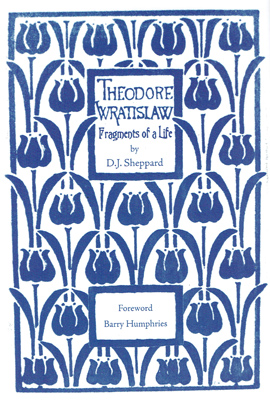 |
Theodore Wratislaw: Fragments of a Life
by D. J. Sheppard Theodore Wratislaw is one of the most biographically elusive figures of the ‘decadent’ 1890s. Though invariably named in accounts of the period, he remains a marginal figure, crowded out by more notorious contemporaries. When noticed, it is usually as an imposter who, whilst adopting the decadent – and, on occasion, homoerotic – pose in his poetry, lived the convention-bound life of a civil servant. The accusation of insincerity has stuck, and had a deleterious impact on the assessment of his work. As the present volume reveals, however, the accusation is based on a mistaken view of his life. Contrary to John Betjeman’s assessment of the ‘buttoned up figure obviously longing to burst out of his narrow neatness,’ Wratislaw’s struggle was to maintain some semblance of bourgeois respectability rather than to escape it. Besides recurring mental illness, he experienced trials and tribulations in his private life on a scale to rival almost any of his peers included amongst Yeats’s ‘tragic generation.’ Hardback: 15.6 x 23.4 cm., 296 pp. 15 black and white illustrations ISBN 978 1 904201 23 4 £40.00 / $50.00 More information |
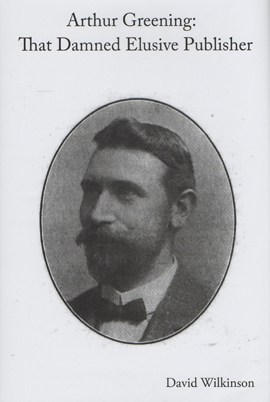 |
Arthur Greening: That Damned Elusive Publisher
by David Wilkinson Arthur Greening (1865-1939) an enterprising song and dance man, the son of a Clapham greengrocer, was torn between business and the stage. In 1897, after serving an apprentice with a provincial newspaper and in partnership with Clement Scott, the drama critic of the Daily Telegraph, he founded his own publishing house. Constantly under-capitalized, the company struggled until success followed the publication of Baroness Orczy’s The Scarlet Pimpernel in 1905. Seven years later Greening & Co Ltd went into liquidation after a High Court case involving a shareholder and Lord Alfred Douglas. Greening’s elusive nature involved dividing himself between two women; he had lived with the shadowy Irene Nason in Surrey since exiling Martha and his two children to Zennor in West Cornwall in 1903. As business dwindled he began to relax in Zennor and, aside from founding the local cricket club, he took to the stage again. Then, in 1925 he and Irene married and set sail for a new life in Australia where they lived on a coral-fringed desert island for a year. Hardback: 15.6 x 23.4 cm., 276 pp. 47 black and white illustrations ISBN 978 1 904201 27 4 £40.00 / $60.00 More information |
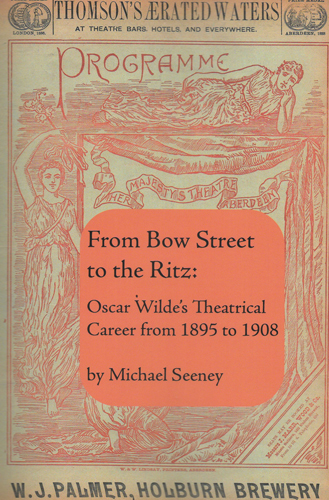 |
From Bow Street to the Ritz: Oscar Wilde's Theatrical Career from 1895 to 1908 by Michael Seeney Most studies of Wilde have assumed that because his plays left the West End for a time after his imprisonment, his work was not seen on stage until the new century. But all through his time in prison and after the theatres of England, Wales, Scotland and Ireland saw all four of the comedies on a regular basis. Using contemporary newspaper and other reports this study brings together a wealth of material on the many tours as well as providing useful background on the state of provincial theatres and touring companies at the turn of the century - an area that has long been neglected. The period covered is from Wilde’s arrest to the Robert Ross dinner at the Ritz in 1908, by which time Wilde’s copyrights had been secured and theatre managers no longer worried about publicising his name. A separate chapter deals with the extensive tours of Wilde plays in Australia, New Zealand, South Africa, India and China during the same period. Paperback: 15.6 x 23.4 cm., 176 pp. 16 black and white illustrations and 4 colour plates ISBN 978 1 904201 26 7 £12.50 / $20.00 More information |
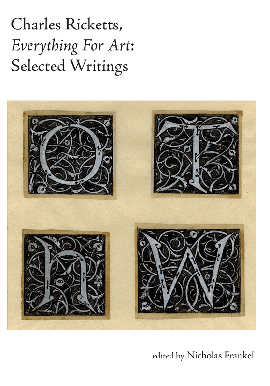 |
Charles Ricketts, Everything For Art: Selected Writings edited with an introduction by Nicholas Frankel Charles Ricketts (1866-1931) has been called the quintessence of the 1890s. One of the period’s foremost book designers and illustrators, he was eagerly sought after by many of the leading writers and publishers of his day, and he collaborated frequently with Oscar Wilde (among others), for whom he designed numerous books. While Ricketts is well-known for his collaborations, this is the first book to present Ricketts as an intellectual force in his own right. It demonstrates the breadth of vision driving one of the most important (and neglected) aesthetes of the late-Victorian era, gathering Ricketts’s writings in the fields of book design, art history, memoir, and fiction. Along with reproductions of over thirty of Ricketts’s most beautiful designs (eight in colour), it includes full texts of “The Unwritten Book” (1892), “Of Typography and The Harmony of the Printed Page” (1896), A Defence of the Revival of Printing (1899), Beyond The Threshold (1929), and Oscar Wilde: Recollections (1932) – the latter an indispensable and intimate account by one whom Wilde called “the subtle and fantastic decorator” of his work. It reveals Ricketts as a nuanced theorist of typography, a decisive figure in the history of printing, a skilled writer of fiction and art criticism, and a careful observer of a period in which he was also a major player. It will interest all students of the fin-de-siècle, as well as those with specialized interests in book history and design, the visual arts, Oscar Wilde, Michael Field, and the Decadent Movement. Hardbound: 15.6 x 23.4 cm., 351 pp. 33 black and white illustrations and 8 color plates ISBN 978 1 904201 22 9 £40.0 / $60.00 More information |
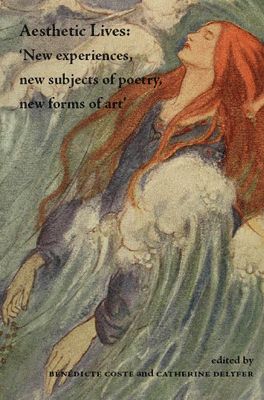 |
Aesthetic Lives:‘New experiences, new subjects of poetry, new forms of art’
edited by Bénédicte Coste and Catherine Delyfer In his epoch-making book of 1873, Walter Pater described the medieval Renaissance as a search for ‘new experiences, new subjects of poetry, new forms of art.’ But knowing his oblique way of discussing the present under the guise of the past, one may argue that in The Renaissance Pater was also in fact defi ning a contemporary tendency, a contemporary rebirth, which coincided with the rise of ‘Aestheticism’ and is the object of the present collection of essays. The purpose of this volume, however, is not so much to define Aestheticism strictly as to frame it more comprehensively and, building on current research, explore the Aesthetic experience as a new and specific category. Hardbound: 15.6 x 23.4 cm., 217 pp. ISBN 978 1 904201 23 6 £30.0 / $45.00 More information |
| Rivendale Press P. O. Box 85, High Wycombe, Bucks, HP14 4WZ England TEL: 01494 562266 E-MAIL: sales@rivendalepress.com |
|